Legal Paradox in Enugu: Federal High Court’s Judgment on ₦150 Million ENSSAA Campaign Permit Reveals Deep Contradictions Between Reasoning and Final Orders
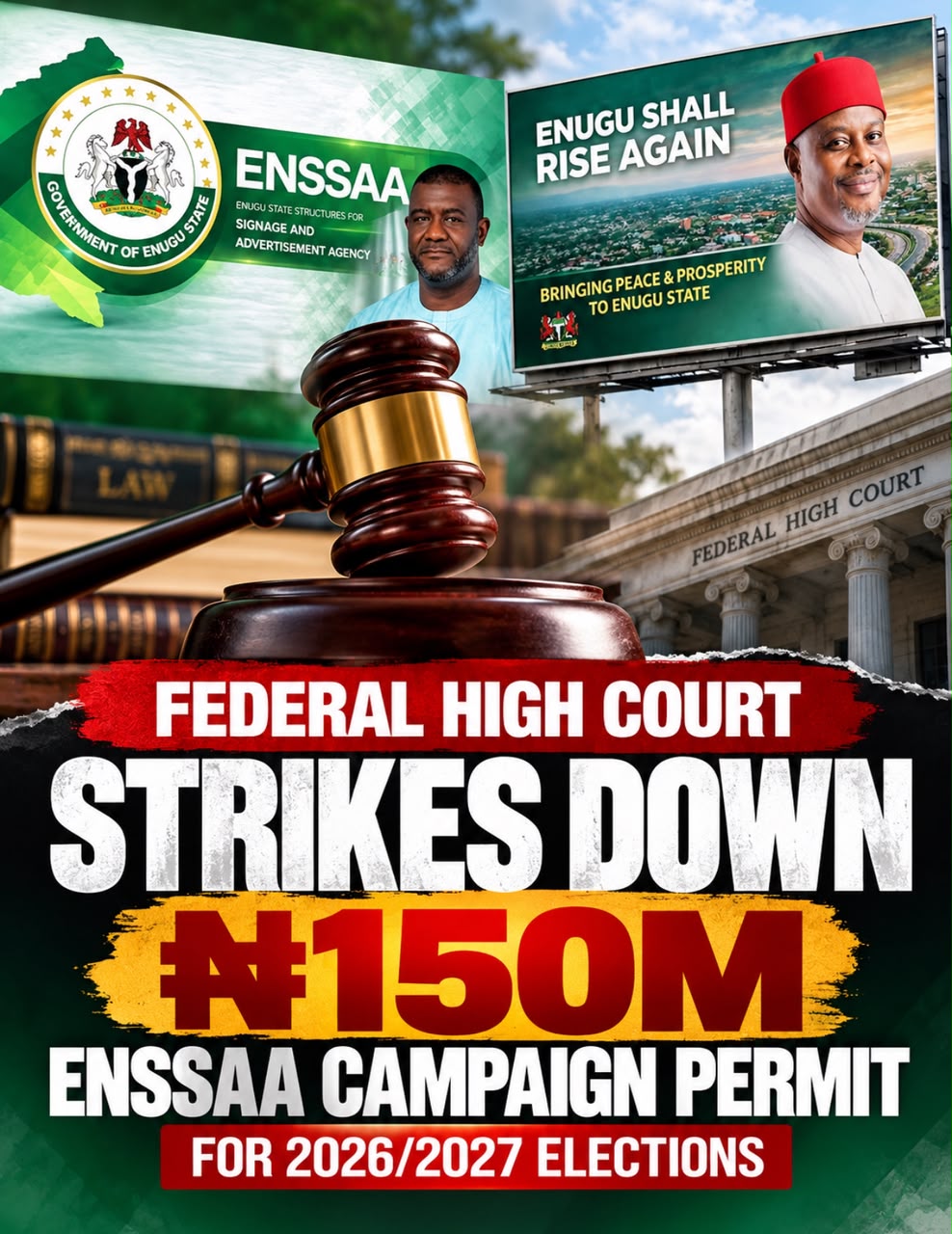
The legal battle surrounding the regulation of political advertising ahead of the 2026/2027 general elections in Enugu State has taken a confounding turn following a recent judgment from the Federal High Court. The core of the legal challenge targeted the controversial February 9, 2026 directive by the Enugu State Signage and Advertisement Agency (ENSSAA), which mandated political parties, candidates, and campaign organizations to pay a staggering ₦150 million advertising-permit fee for billboard and poster placement.
Initial public briefings and early statements circulated by media teams presented contrasting narratives about the verdict, but a detailed inspection of the certified true copy of the judgment exposes a stark internal contradiction that has left legal practitioners and political stakeholders grappling for clarity. On the face of the court's final numbered orders, the ₦150 million directive appears to be upheld. The concluding orders explicitly declare that ENSSAA and its General Manager possess the statutory authority to regulate outdoor advertising and impose fees, that the Enugu State House of Assembly holds the legislative competence to regulate outdoor advertising, and that the February 9 directive does not constitute an unlawful use of state apparatus contrary to section 99(2) of the Electoral Act. Furthermore, the final orders state that all other principal reliefs claimed by the plaintiffs were refused, with each party bearing its own costs.
However, a critical examination of the body and reasoning of the judgment presents the exact opposite position regarding key remedial prayers. In its substantive evaluation of the issues, the court explicitly noted that the plaintiffs were entitled to relief (e) to set aside the February 9 directive as unlawful specifically for the 2026/2027 election cycle. Similarly, the body of the ruling reasoned that relief (f) should be granted to restrain ENSSAA, its agents, and the Enugu State Government from enforcing that specific fee against political parties during the current election cycle, without prejudice to future properly delegated regulatory frameworks. It further indicated that relief (g) should be granted to direct the Nigeria Police Force to protect political parties against harassment while deploying campaign materials.
This glaring disconnect—where the comprehensive legal reasoning of the judge strongly justifies granting the primary reliefs sought by the political parties, yet the formal concluding orders omit and effectively reverse those remedies—has created a substantial legal paradox. Legal experts have pointed out that while the ₦150 million fee technically remains enforceable on a strict reading of the final operative orders, the profound self-contradiction embedded within the text provides formidable grounds for a formal application for judicial clarification or an urgent appeal. Consequently, political actors and legal counsels have been advised to approach public commentary with extreme caution, recognizing that the judgment contains an appealable anomaly that transcends a simple victory or defeat for either side.
Don't miss a single update
Related Stories
The Unspoken Horror: Unmasking the Brutal Wave of Targeted Violence, Religious Persecution, and Global Silence on the Plight of Christians in Nigeria
Divine Mandate: Prophetic Declarations Sound Out from Zion Ministry as Chief Uche Geoffrey Nnaji’s Vision for Enugu Rises with Spiritual Power
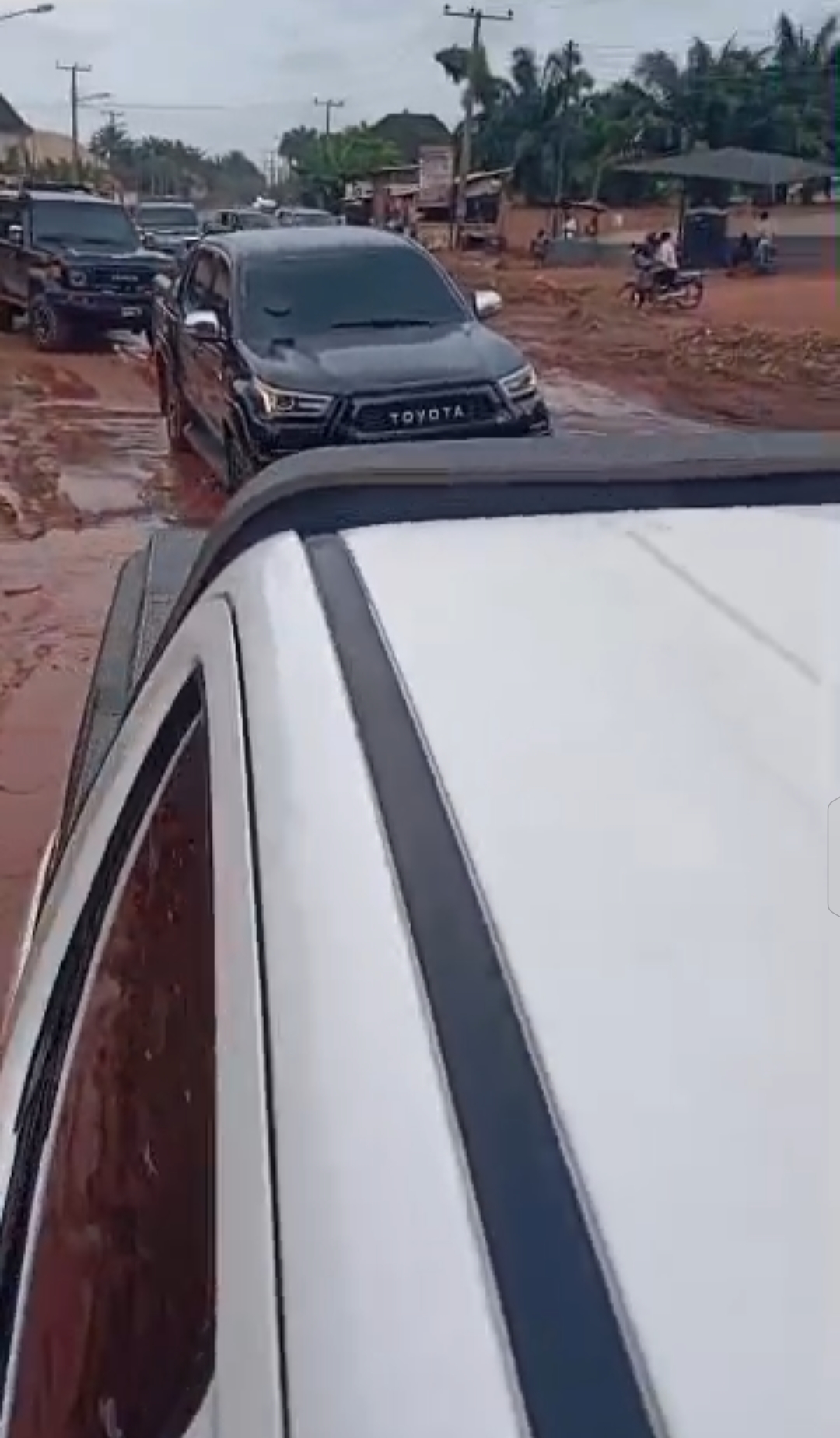
“Cry No More, Uche Is Here to Serve”: Chief Uche Geoffrey Nnaji (Nwakaibie) Takes a Hands-On Tour of Nsukka, Assures Marginalized Communities of Real Hope