The Church, Electoral Integrity, and the 2027 Imperative: A Comprehensive Synthesis of the Landmark Paper Presented at the 11th Synod of the Diocese of Nsukka
Elections in Nigeria are never mere political exercises; they are profound existential moments that dictate the survival, security, economic prosperity, and generational future of millions. Yet, for decades, the nation has remained a potentially great country held hostage by poor leadership, pervasive corruption, and a flawed electoral framework. Nigerian society is currently characterized as a failing state where human life is regrettably valued less than cattle, where an insensitive political elite presides over crushing inflation and insecurity, and where governance is systematically skewed to favor a greedy cabal while the masses queue endlessly for palliatives.
To change this tragic trajectory, the Church must dismantle the dangerous "born-again syndrome"—the erroneous theological misconception that heaven is our only concern while the earth is abandoned to the wicked. As encapsulated in Proverbs 29:2, when the wicked rule, the people mourn. Scripture and civic duty demand that the righteous take their rightful place at the gates of leadership.
Redefining Participation and Confronting Electoral Evils
Responsible participation extends far beyond casting a ballot on election day. It requires obtaining Permanent Voter Cards (PVCs), coming out without fear, defending votes until official results are declared, and fiercely resisting vote-buying. Conversely, irresponsible participation involves trading one's future for cups of rice, wrappers, or cash, or staying at home under the cynical excuse that votes do not count.
The paper launched a scathing critique of the dark forces plaguing Nigeria's electoral landscape, highlighting:
Nepotism, tribalism, and toxic religious polarization, where voters blindly support incompetent candidates simply because they share the same denomination or ethnicity.
The insidious danger of "Greek gifts"—unsolicited material handouts given by desperate politicians to churches and religious leaders close to elections to muzzle the prophetic voice.
Electoral malpractices, judicial compromises, voter apathy, and the dangerous subjugation of legislative independence to executive overreach.
The Anglican Self-Critique and the Doctrine of Non-Partisanship
A painful internal truth was laid bare: while the Anglican Church boasts immense political consciousness, it suffers from severe organizational deficits, failing to track, mentor, or hold accountable its members who attain political office. To correct this, the Synod recommended creating a comprehensive database and digital platforms to mentor young people and support members in public service.
Crucially, the Church must maintain a clear distinction between being apolitical (showing zero interest in governance) and non-partisan (refusing to become an appendage of any political party). The Church is the moral compass of society and must never sell its altar for political patronage, endorse candidates from the pulpit, or turn prophecies into political predictions.
A Concrete Roadmap for 2027 and Beyond
To ensure that the 2027 general elections usher in competent, compassionate leaders with proven track records rather than empty platforms, the Synod outlined a robust action plan for the Church:
Mass Mobilisation and Civic Education: Parishes must maintain active PVC registers and organize intensive civic workshops through Directorates of Politics and Inter-Governmental Affairs.
Town Hall Engagements: The Church should organize inter-denominational town hall meetings to force political aspirants to present verifiable manifestos and sign charters for good governance.
Youth Empowerment as Peace Ambassadors: Establishing Election Peace Clubs to insulate young people from being exploited as political thugs by self-serving godfathers.
Electoral Watchdog Integration: Partnering with credible civil society bodies to train non-partisan election observers and monitor voting irregularities.
Conclusion
Prayer remains central, but faith without civic action is dead. The Church must combine fervent prayers with active, courageous participation. Nigeria does not need a Church that merely laments the prevailing darkness; Nigeria needs a Church that actively radiates light. If the Church rises, Nigeria will rise.
Don't miss a single update
Related Stories

The Unspoken Horror: Unmasking the Brutal Wave of Targeted Violence, Religious Persecution, and Global Silence on the Plight of Christians in Nigeria
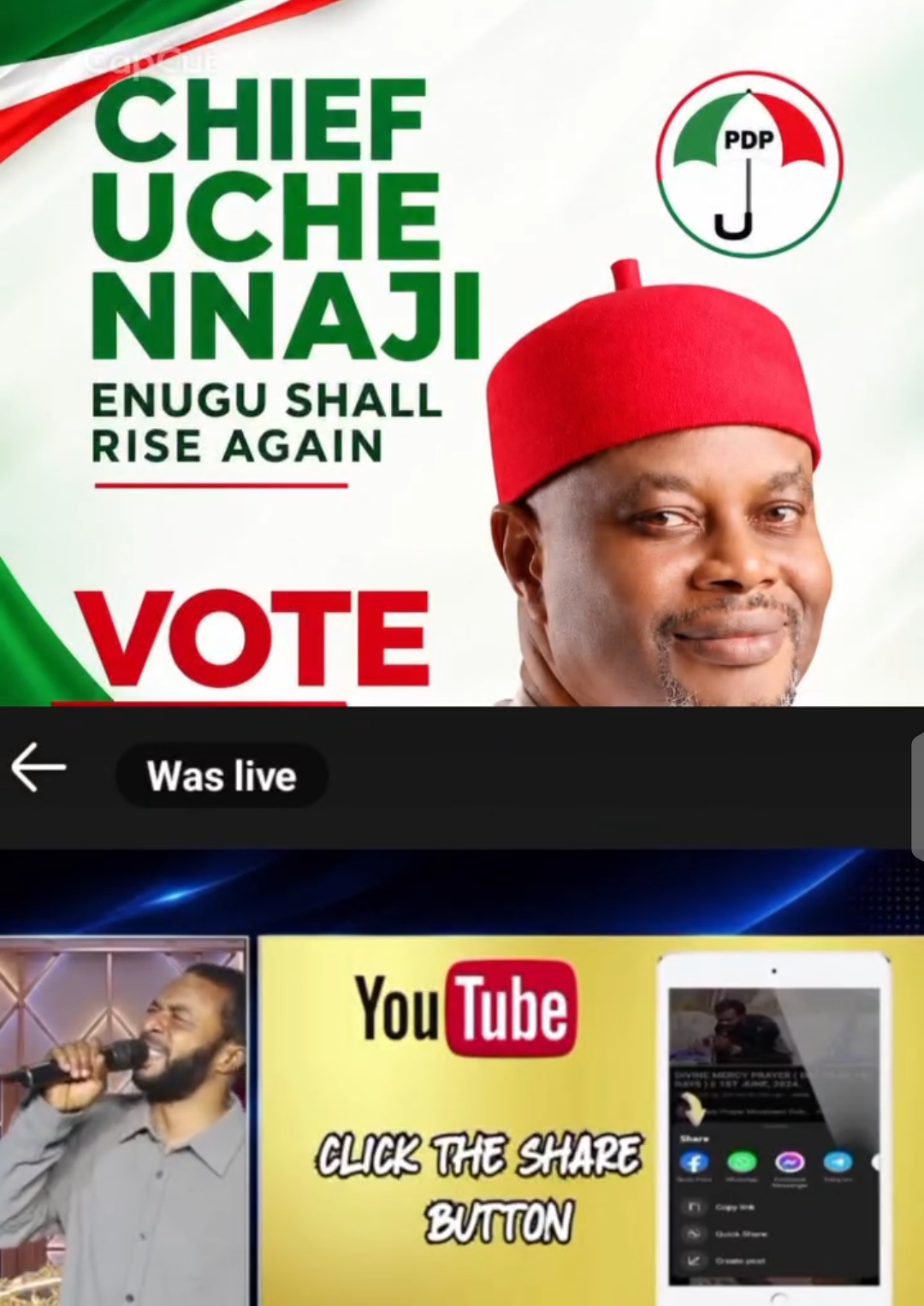
Divine Mandate: Prophetic Declarations Sound Out from Zion Ministry as Chief Uche Geoffrey Nnaji’s Vision for Enugu Rises with Spiritual Power

“Cry No More, Uche Is Here to Serve”: Chief Uche Geoffrey Nnaji (Nwakaibie) Takes a Hands-On Tour of Nsukka, Assures Marginalized Communities of Real Hope