Fiscal Policy Under Scrutiny: Public Debates Intensify Over Enugu State's Rising Debt Profile and Revenue Strategy
A sharp public debate is ongoing regarding the fiscal management, borrowing strategy, and taxation policies of the Enugu State government. Political commentators and residents are increasingly scrutinizing official debt metrics, raising fundamental questions about long-term financial sustainability and the immediate burden placed on citizens.
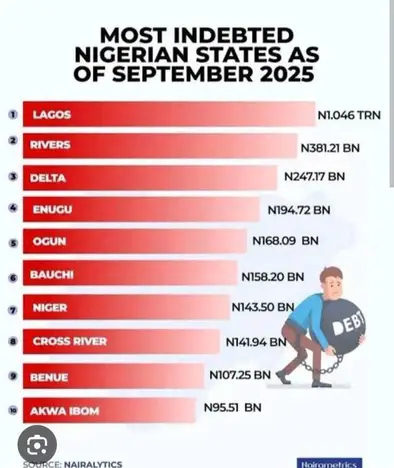
Data from official debt tracking reports indicates that Enugu State's debt profile has expanded rapidly. While the state inherited a long-standing baseline from the previous administration under Ifeanyi Ugwuanyi, subsequent approvals—including a prominent ₦170 billion credit facility—have substantially pushed total liabilities upward. Critics argue that commercial hubs like Lagos or oil-producing states like Rivers and Delta possess diversified corporate taxes and federal derivation revenues to service large debt burdens, whereas Enugu relies heavily on aggressive domestic revenue drives, land transaction fees, and direct taxation that directly impacts lower-income rural residents.
The political discourse surrounding the state's financial direction focuses on several contrasting viewpoints:
Comparing Executive Fiscal Profiles: Defenders of the previous administration point out that former Governor Ifeanyi Ugwuanyi maintained a relatively low domestic debt ceiling compared to the multi-billion naira facilities processed under current leadership. They argue that lower borrowing preserved fiscal stability, even if economic growth proceeded at a slower pace.
Taxation Methods and Economic Impact: Critics contend that generating internal revenue through strict enforcement on informal sectors, rural marketplaces, and property sales places an undue strain on ordinary citizens during a period of high national inflation. They emphasize that revenue generation should focus on industrial expansion rather than pressing rural communities.
Justification for Capital Borrowing: Supporters of the current administration maintain that massive infrastructure investment—covering road networks, water projects, smart schools, and transport systems—requires upfront capital financing. From this perspective, borrowing is a deliberate tool to unlock long-term economic growth and expand the state's GDP.
Regional Debt Standings: With Enugu emerging as a prominent debtor in the South-East region, civic groups are calling for greater transparency regarding loan utilization, interest rates, and clear repayment frameworks to prevent future fiscal distress.
Balancing necessary public infrastructure funding with sustainable debt management and equitable tax policies remains one of the most critical governance challenges facing Enugu State.
Don't miss a single update
Related Stories

Health Crisis Looming: Fake Toothpaste And Adulterated Palm Oil Spark Public Health Fears In Nigeria

Deindustrialization In Enugu: How A Former Manufacturing Powerhouse Shifted From Factories To Service Estates

IKPA MARKET NSUKKA: FARMERS AND TRADERS DECRY ABANDONED AGRICULTURAL POTENTIAL AND GROWING INSECURITY IN ENUGU
