
Rebuttal to Recent Media Report on Chief Uche Geoffrey NNaji .
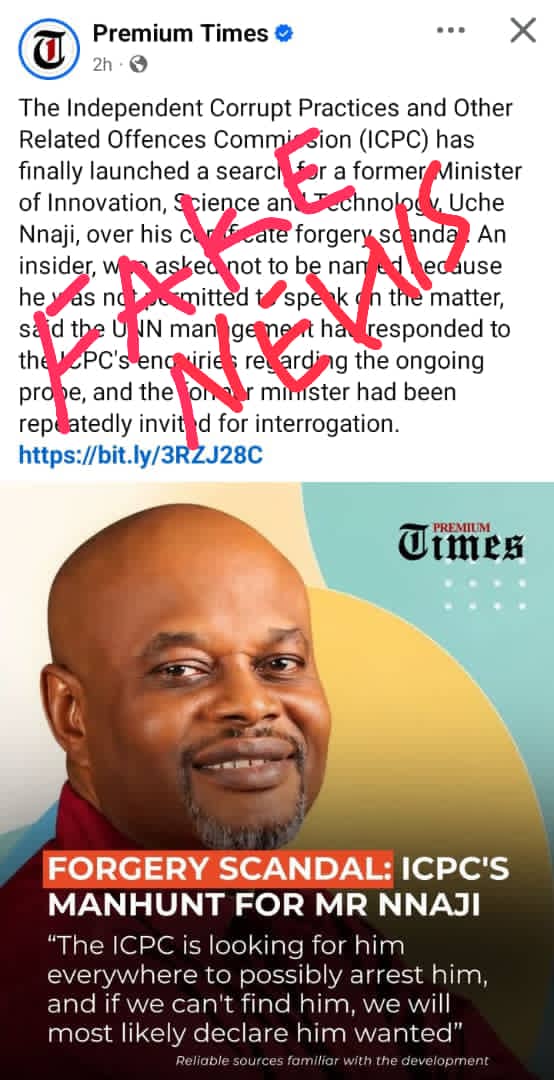
In recent days, public discourse has been shaped by a widely circulated report by Premium Times concerning alleged claims involving the Independent Corrupt Practices and Other Related Offences Commission (ICPC) and former Minister of Innovation, Science, and Technology, Chief Uche Geoffrey Nnaji.
The report has generated significant debate, particularly among political observers and supporters, prompting a need for clarification and contextual interpretation of the claims presented.
Concerns Over the “Manhunt” Narrative
The portrayal of a so-called “manhunt” has been questioned by supporters of Chief Uche Geoffrey Nnaji, who argue that the narrative does not align with his continued public visibility and engagement.
In contrast to suggestions of concealment, Chief Nnaji has remained actively present in public and political activities. He was recently seen participating in the Peoples Democratic Party (PDP) primary elections at Akpugo Ward 3 in Nkanu West Local Government Area, engaging openly with constituents and party stakeholders.
Additionally, during the period in question, he has granted live interviews to several national media platforms, including Arise News, Channels Television, NTA, and TVC News. He has also attended various public functions across Enugu State, maintaining regular interaction with community members and stakeholders.
These ongoing engagements have led his supporters to question the consistency of the “on the run” characterization as presented in the report.
Media Responsibility and Source Verification
The situation has also raised broader concerns regarding media reporting standards and reliance on unnamed sources.
While investigative journalism often depends on confidential informants, observers emphasize the importance of corroboration with official statements, particularly when reporting on sensitive allegations involving law enforcement or anti-corruption agencies.
The ICPC, as a statutory body, typically communicates official positions through established public channels. As of the time of reporting, no formal public declaration confirming a “manhunt” or similar status has been issued by the Commission.
This absence of official confirmation has contributed to ongoing debate regarding the framing and interpretation of the report.
Political Context and Public Perception
Some political observers interpret the development within the broader context of evolving political dynamics in Enugu State. Chief Nnaji remains a prominent political figure with significant grassroots influence, particularly within his constituency.
His supporters maintain that ongoing media narratives may reflect heightened political competition, while critics urge caution against politicizing unverified reports.
Conclusion
Chief Uche Geoffrey Nnaji is widely regarded by his supporters as a public figure who continues to engage actively in political and civic life. They maintain confidence in his commitment to lawful conduct and public service.
As the situation develops, stakeholders and the general public are encouraged to rely on verified information from official institutions and credible confirmations rather than uncorroborated reports.
Ultimately, public discourse is best served by balanced reporting, institutional transparency, and adherence to established journalistic standards.
Don't miss a single update
Related Stories

Nwakabie’s Campaign Agenda Sparks Debate: Are His Promises Reshaping Governance in Enugu State?
The Forgery Syndicate Exposed: Dr. Ben Nwoye Sacks Chief of Staff Timothy Amah Over Multi-Million Naira Imo West Senatorial Primary Heist
OBE WARD REAFFIRMS SOLIDARITY WITH NWAKABIE, RENEWS COMMITMENT TO PDP AHEAD OF 2027