
2027: THE DAWN OF A NEW ENUGU

There comes a time in the life of every society when the people must decide whether to continue managing survival or to embrace genuine development. Enugu State now stands at such a historic crossroads. The background of leadership determines the lifestyle of the people. When leadership is disconnected from the suffering of the masses, poverty deepens, opportunities disappear, and governance becomes distant from reality.
But when leadership understands the heartbeat of the people, development becomes visible in homes, schools, hospitals and communities.
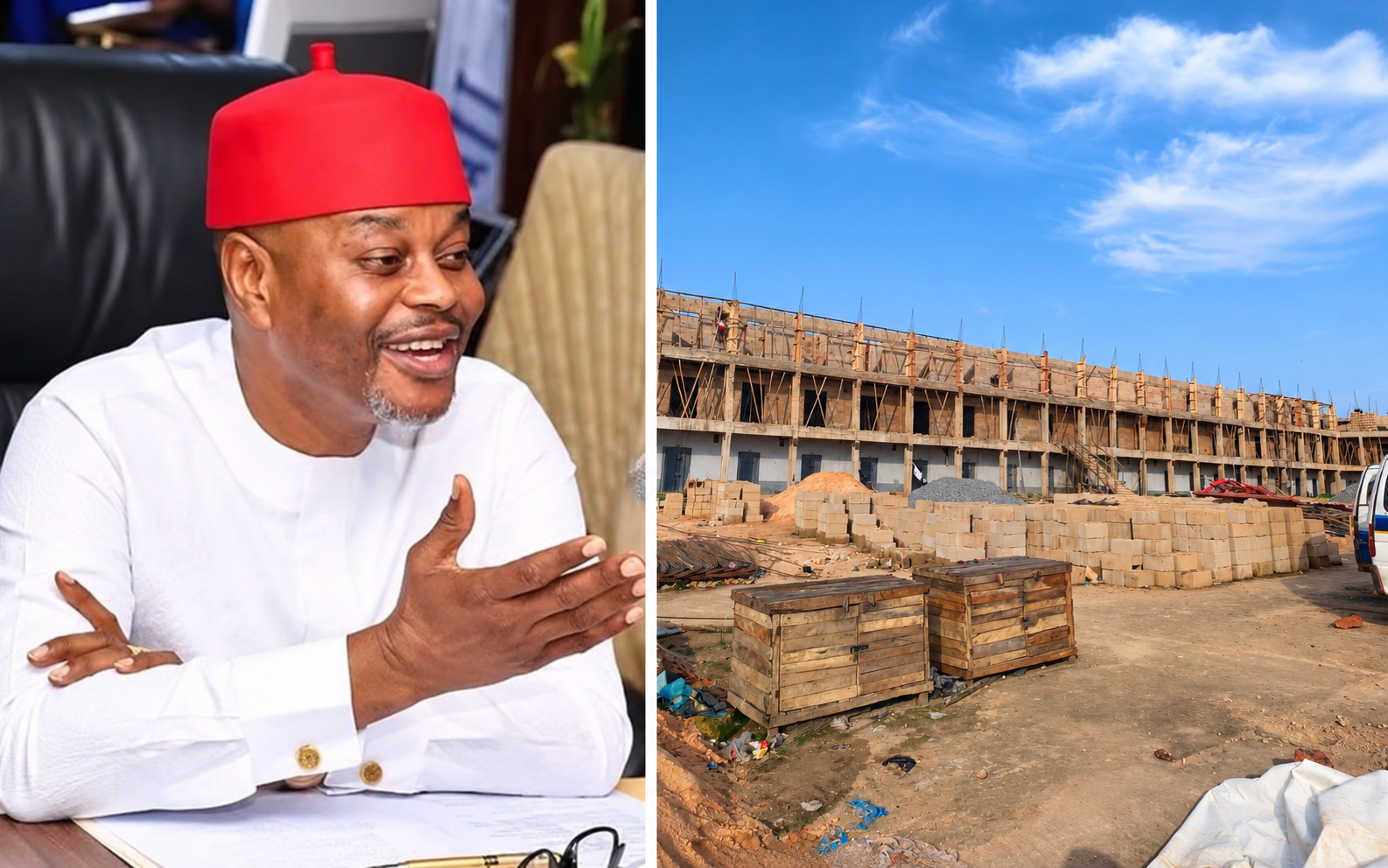
This is why many residents of Enugu State are beginning to see Chief Uche Geoffrey Nnaji as the credible alternative for Lion Building in 2027.
The vision being projected is simple but powerful: government must work for the ordinary citizen.
A government under Uche Nnaji is expected to prioritise workers’ welfare by proposing a significant improvement in the minimum wage from ₦70,000 to ₦150,000 or above. This is more than a salary increase; it is a declaration that workers deserve dignity. A hungry workforce cannot build a productive society. Teachers, civil servants, nurses and artisans deserve a government that values their sacrifices.
Yet, beyond wages lies something even more important institutional reform.
For too long, political patronage has weakened critical sectors in Nigeria.
Educational institutions should not become retirement homes for political loyalists.
Under the envisioned leadership of Uche Nnaji , appointments of head teachers, principals, rectors, provosts and vice-chancellors would be driven by merit, competence and proven administrative ability rather than political connections.
Education must return to excellence.
The same principle applies to healthcare. During the global health crisis of COVID-19 pandemic, Nigerians witnessed how capable leadership in the health sector could save lives. The appointment of a capable figure during that difficult period demonstrated the value of competence in governance. Enugu deserves commissioners and health administrators selected because they can deliver results, not because they belong to political camps.
A society develops when innovation becomes a culture. Science and technology are no longer optional; they are the engines of modern civilisation.
The prophetic words in the famous song by Oliver De Coque about science and technology transforming society remain relevant today. Development comes when people use their hands, minds and creativity to build industries, invent solutions and create wealth.
Enugu State possesses brilliant sons and daughters across the world. Many indigenes from the state are excelling as engineers, medical professionals, academics, software developers, researchers, construction experts and entrepreneurs in the United States, across Europe and beyond. The achievements of notable Enugu indigenes in medicine, engineering, law, entertainment, academia and technology prove that the people have the capacity to transform their homeland if given the opportunity.
Imagine if these talents had never been trusted or encouraged. The world would never have known their greatness.
That is why the
proposed emphasis on indigenous contractors carries emotional and economic significance. The idea is clear: qualified professionals and contractors from Enugu State should be empowered to handle projects within the state.
Local empowerment creates jobs, stimulates economic growth and builds community pride. Outsiders may still contribute where necessary, but the era of sidelining competent indigenous professionals will end.
Another cornerstone of this vision is accountability.
Grassroots politicians and public office holders must understand that public funds belong to the people. Every naira generated must be properly accounted for. Governance will not happen through distant appearances or media performances; leadership must remain visible among the people. Roads, schools, hospitals, water projects, markets and youth empowerment programmes should become measurable evidence of governance.
The philosophy echoes the timeless democratic principle of government of the people, by the people and for the people.
This is why many believe that Uche Nnaji would govern Enugu State not as a private enterprise but as a collective trust belonging to all citizens. Under such leadership, the farmer in Nsukka, the trader in Ogbete, the artisan in Awgu, the student in Agbani and the civil servant in Enugu metropolis would all feel included in the development process.
Employment generation would become a priority. Youths should not be abandoned to hopelessness while enormous human potential remains untapped. A productive government must engage every willing hand in agriculture, technology, construction, education, commerce and industrialisation.
Development is fastest when all hands are on deck.
Enugu State was once celebrated for vision, order and intellectual strength. The state can rise again through leadership rooted in competence, accountability, inclusion and people-oriented policies.
The conversation about 2027 is therefore becoming larger than politics. It is becoming a debate about the future identity of Enugu State itself.
Will the people continue with familiar disappointments, or will they embrace a leadership model built on merit, transparency, workers’ welfare, indigenous empowerment and visible development?
For many citizens, the answer is becoming increasingly clear.
2027 may indeed mark the beginning of a new dawn for Enugu State.
LION BUILDING MEDIA TEAM FOR NWAKAIBIE
Don't miss a single update
Related Stories

Action Over Rhetoric: Incoming Enugu Governor Uche Geoffrey Nnaji (Nwakaibie) Endorses Engr. Austin Ngwu (Zeroth) for Nsukka/Igboeze South Federal Constituency
Nwakabie’s Campaign Agenda Sparks Debate: Are His Promises Reshaping Governance in Enugu State?
OBE WARD REAFFIRMS SOLIDARITY WITH NWAKABIE, RENEWS COMMITMENT TO PDP AHEAD OF 2027